




Somewhere between functional food and emotional well-being, “Mood Food” is gradually emerging as a new frontier for innovation in the food and nutraceutical industries. Driven by the search for more personalized dietary solutions, this trend is transforming formulation approaches and opening up new possibilities for wellness products.
Mood Food, a trend that meets a new consumer expectation
Changing Expectations Regarding Food
Long associated solely with its nutritional function, food is now viewed in a more holistic way. Consumers are now looking for products that can contribute not only to their physical well-being but also to their emotional balance. In a world marked by stress and mental fatigue, food products are becoming key drivers of everyday well-being.
Mood Food is part of this trend. At the intersection of functional foods and food innovation, Mood Food aims to develop products that address specific needs, such as relaxation, concentration, sleep quality, and vitality. More than just a consumer trend, it reflects a lasting shift in market expectations toward more personalized food solutions.
Functional benefits without compromising on enjoyment
This transformation is also changing consumers’ purchasing criteria. While functional benefits remain essential, they are no longer the sole deciding factor. Taste, flavour, texture, and the sensory experience directly influence how consumers perceive a product’s quality.
Functional beverages, dietary supplements, gummies, fortified dairy products, and functional snacks are examples of this new generation of products. In these categories, innovation is no longer based solely on the inclusion of functional ingredients. It also involves offering a taste experience that aligns with the product’s promise.
For manufacturers in the food and nutraceutical industries, this trend opens up new opportunities for growth. It also brings new requirements for product formulation, where nutritional performance must be paired with a carefully controlled sensory experience.
From a Japanese philosophy to a rapidly growing global market
An approach inspired by Japanese culture
The links between diet and well-being have been studied for several decades. Japan, however, has played a major role in shaping this approach. As early as the 1990s, the country began developing the concept of FOSHU (Foods for Specified Health Uses). This category includes products recognized for their specific health benefits.
This vision, based on a balance between nutrition, prevention, and quality of life, has gradually influenced international markets. Today, it guides the development of products designed to support various well-being needs, such as stress management and concentration.
A market driven by food innovation
Mood Food is now emerging as a rapidly expanding market. According to industry estimates, the global market for ingredients designed to promote emotional well-being is expected to grow by approximately 7.2% in the coming years. This trend is driving the development of functional foods, dietary supplements, and nutritional beverages.
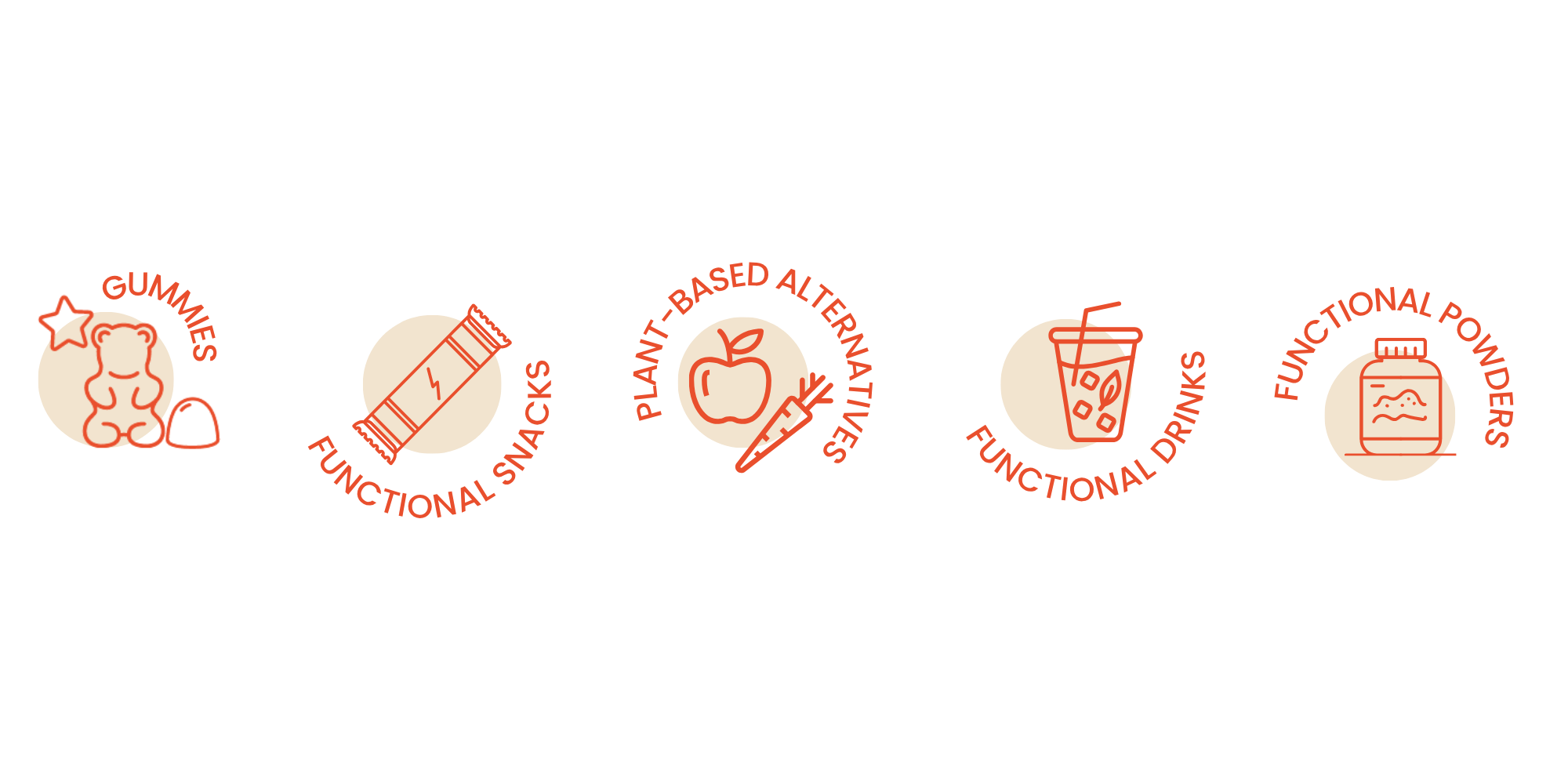
Furthermore, this growth is driven by the diversification of applications. Functional beverages are among the most dynamic segments, alongside gummies, nutritional powders, fortified products, functional snacks, and plant-based alternatives.
For manufacturers, this trend represents much more than a business opportunity. It reflects a lasting transformation of the market, where the success of a formulation depends as much on the suitability of the functional ingredients as on the ability to deliver a sensory experience that meets consumer expectations.
The real challenge: combining functional effectiveness with a sensory experience
Functional ingredients with complex sensory profiles
The development of Mood Food products represents a real opportunity for innovation for manufacturers. However, formulating these products also presents technical challenges, particularly in terms of sensory characteristics.
Botanical extracts, vitamins, minerals, amino acids, and other functional ingredients may have complex organoleptic profiles. Certain molecules impart bitter, grassy, metallic, or astringent notes that can influence the overall perception of the product. In formulations such as functional beverages or dietary supplements, these characteristics can quickly become a barrier to product acceptance.
The challenge, therefore, lies not only in the selection of ingredients. It also involves developing a formulation that ensures a pleasant tasting experience consistent with the product’s promise.
From Aroma to the Development of a Cohesive Sensory Profile
In Mood Food formulations, the challenge is not merely to add an appealing aromatic note. It is about creating a sensory profile that is consistent with the matrix and the active ingredients present in the product.
L’aromatisation doit ainsi prendre en compte de nombreux paramètres : intensité en bouche, équilibre des perceptions, gestion des notes indésirables, persistance aromatique ou encore une note finale agréable. Chaque interaction entre les ingrédients peut influencer la perception finale du produit.
For manufacturers, this comprehensive approach is essential to maintaining the sensory consistency of formulations and fully realizing the product’s functional benefits.
Aromalogy and MaskOver: Creating a Consistent Sensory Experience
To address these formulation challenges, a sensory approach must be incorporated from the very beginning of the product design process. Our Aromalogy and MaskOver lines are designed with this philosophy in mind.
With Aromalogy, we create aromatic signatures for companies in the food and nutraceutical industries. This approach to emotional and functional aromatics allows us to design profiles that reinforce a product’s promise, strengthen brand preference, and restore the full enjoyment associated with wellness products.
With MaskOver, we address the sensory challenges associated with incorporating functional ingredients. Thanks to our expertise in masking flavours, we help mitigate the undesirable notes generated by certain active ingredients, such as bitterness, grassy notes, or metallic aftertastes. This approach preserves their performance while enhancing the tasting experience.

This sensory expertise is essential for developing functional products that are both effective and enjoyable to consume. By combining aromatic innovation with expertise in masking off-flavours, Aromalogy and MaskOver support manufacturers in their Mood Food development efforts. This approach makes it possible to combine functional benefits, sensory consistency, and the pleasure of consumption.
Conclusion: Toward a New Generation of Wellness Products
Much more than just a trend, “Mood Food” reflects a lasting shift in consumer expectations. Consumers are seeking products that combine well-being, natural ingredients, and the pleasure of eating. For manufacturers, this trend opens up new opportunities for innovation. It also underscores the importance of refining the sensory experience from the very earliest stages of product development.
For more than 30 years, Phodé Human Care has been applying its expertise in aromatics to address these new challenges. Through its sensory-based approach and tailored solutions, the company supports the development of Mood Food products that combine functional benefits, aromatic consistency, and taste enjoyment.
With the “2026 Trends Decoded” series , each month we’ll give you:
– a trend decoded,
– practical tools,
– concrete guidelines,
– and inspiring technical case studies.
Do you have a project or a question? We promise to respond within 48 hours.